E-Invoicing in France: What Your Business Needs to Prepare
E-invoicing in France is becoming mandatory for all French businesses subject to VAT. It is not just a PDF sent by email: it is a structured format, transmitted through approved platforms, with new data reporting obligations. Prepared for in advance, it is a formality that saves you time. Left to the last minute, it blocks your invoicing. Here are the essentials to get ready calmly.
What exactly are we talking about?
Two separate obligations are arriving at the same time, and they are often confused:
- Electronic invoicing (e-invoicing) covers your transactions between French businesses (B2B): every invoice will have to be issued, transmitted and received in a structured electronic format, through an approved platform.
- E-reporting covers the data from your other transactions: sales to consumers (B2C) and transactions with other countries. You do not invoice through the platform, but you send certain information to the tax authorities.
The French government has two goals: to fight VAT fraud and, eventually, to pre-fill your VAT returns from this data.
Timeline for e-invoicing in France
- September 1, 2026: all businesses, whatever their size, must be able to receive an electronic invoice. Large companies and mid-sized companies must also start issuing them.
- September 1, 2027: the obligation to issue e-invoices extends to SMEs, small businesses and micro-enterprises.
In other words: from September 2026, even a small business must be able to receive an invoice in the right format, since its suppliers (large companies) will start sending them. Nobody is entirely spared from the first deadline. The timeline has already been adjusted in the past: always check the current dates on the official French tax website (in French).
What changes in practice
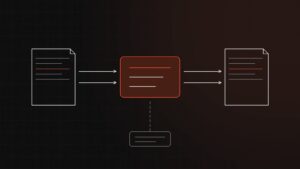
- Your invoices no longer go directly from you to your customer: they pass through a certified e-invoicing platform (PDP, for plateforme de dématérialisation partenaire) registered by the French government. Since the free public invoicing service originally planned has been abandoned, going through a PDP becomes unavoidable.
- Your invoicing tools will have to produce structured formats (Factur-X, UBL or CII), not a plain PDF that a machine cannot read.
- Your customer data must be flawless: one wrong SIREN (French company identification number) or an incomplete address, and the platform rejects the invoice.
- Some transactions trigger e-reporting to the tax authorities (sales to consumers, international transactions).
A concrete example
Take a 12-person service SME that issues about a hundred invoices a month from its business management software, plus a few made “by hand” in Word for special cases.
- The 100 invoices from the software: if the vendor updates its tool (most do), they will go out automatically in the right format through a PDP. Almost no impact on day-to-day work.
- The “Word” invoices: they disappear. A homemade PDF can no longer be sent outside the platform. They will have to be entered in the software.
- On the cash management side: because the invoices received are structured, matching them in the accounts becomes automatic. Less data entry, faster payment.
So the real work is not technical: it is getting 100% of your invoicing through a single tool, with clean data.
How to prepare without stress
The good news: if your management processes are already digital, most of the way is covered. A four-point review is usually enough:
- Will your software be compliant and connected to a PDP? Ask your vendor now.
- Is your customer data up to date: SIREN, intra-EU VAT number, complete addresses?
- Your “off-system” invoices (Word, Excel, paper): how will you bring them into the tool?
- Choosing your PDP: directly through your software, or through an independent platform?
The companies that will struggle are not the ones with old tools: they are the ones that start three months before the deadline.
Frequently asked questions
Do I need to change my invoicing software?
Not necessarily. Most serious software vendors are building the reform into their products and connecting to a PDP. Check with yours: if it has nothing planned, that is the signal to consider a change before the deadline.
Is the traditional PDF sent by email a thing of the past?
For your B2B invoices in France, yes. An unstructured PDF will no longer be a valid invoice. Factur-X looks like a PDF but carries machine-readable data: this hybrid format bridges the old world and the new.
What is a PDP, in practice?
A Plateforme de Dématérialisation Partenaire (partner dematerialization platform): a private operator registered by the French authorities, through which your invoices pass. It is the equivalent of an approved “post office” for your electronic invoices.
What is the risk of not being ready?
Quite simply, blocked invoicing: you can no longer issue invoices, so you can no longer get paid, nor properly process your suppliers’ invoices. Financial penalties are also planned. The risk is not theoretical, it is operational.
Take stock now, not in August 2026
411bit supports your compliance from start to finish: review of your current setup, selection or adaptation of tools, customer data cleanup, connection to a PDP and to your sales management system. The goal: a switchover your teams do not even notice. Let’s review your invoicing. A few weeks are more than enough when you plan ahead.